Explores how knowledge is created through the scientific method, emphasizing the importance of asking good questions, developing hypotheses, and understanding the messiness of research. It covers the critical evaluation of data, recognizing uncertainty, and the roles of peer review and reproducibility in discovery.
The FutureSciTech LeadersSummit
Where Nobel Laureates Come to Inspire
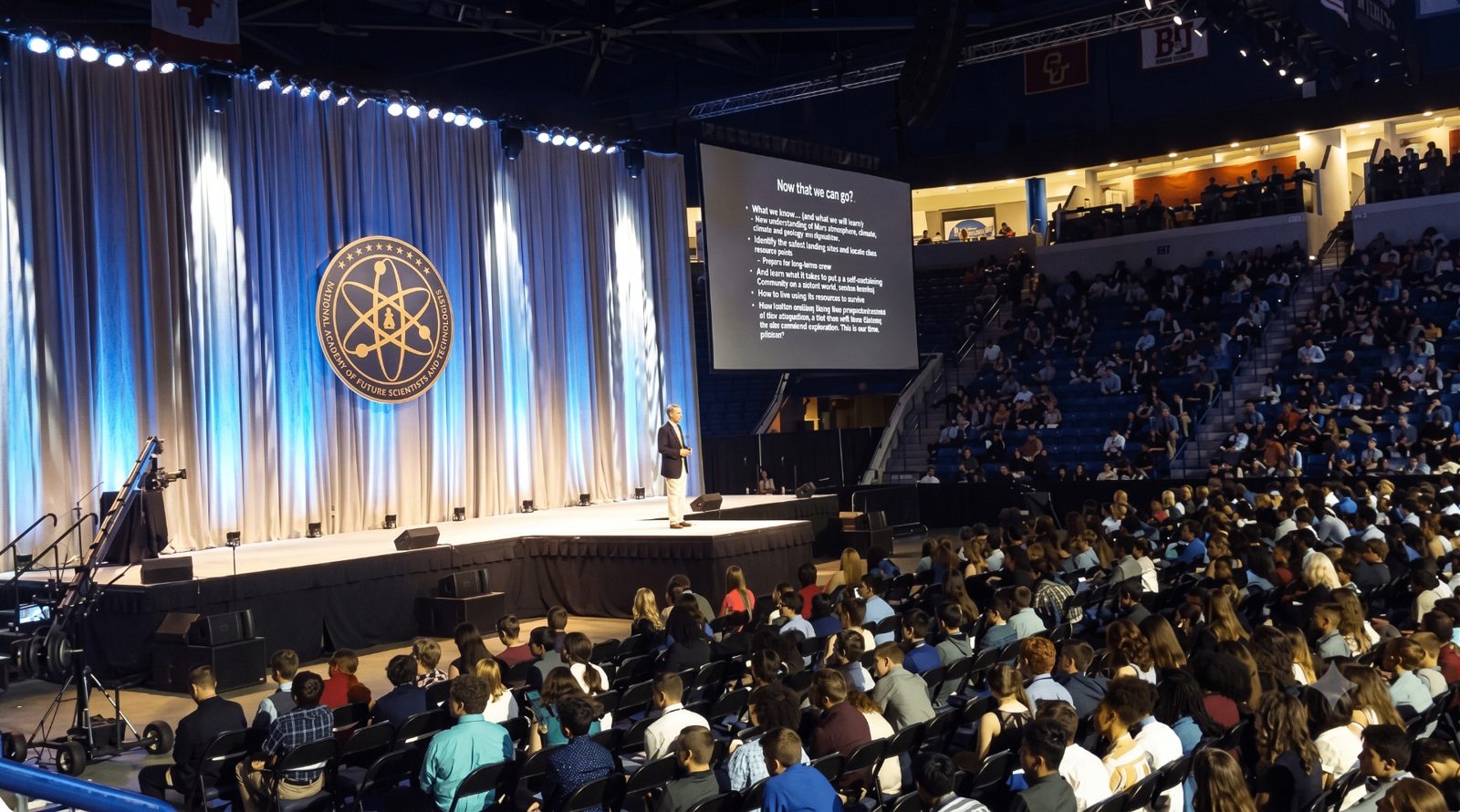
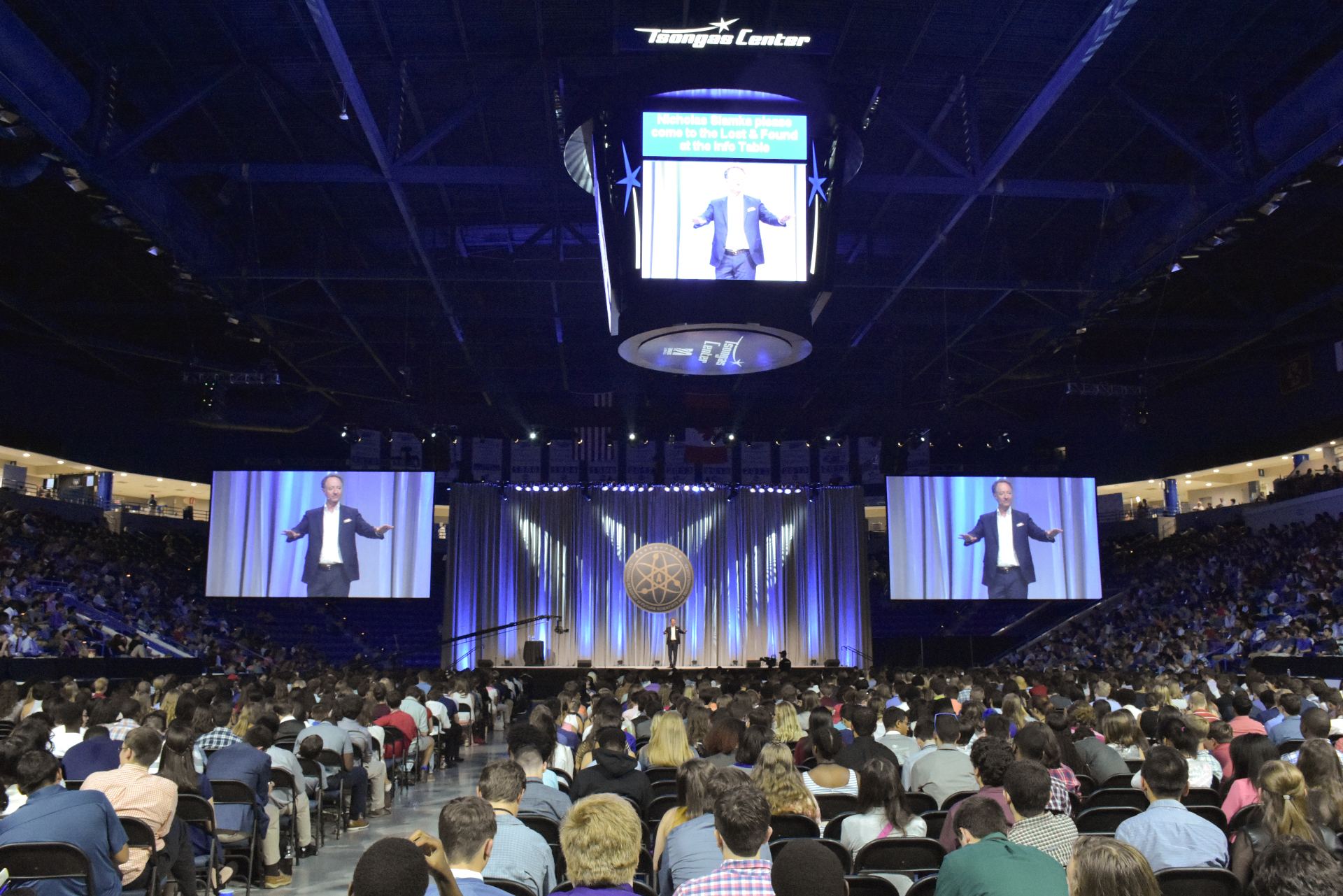
The nationally recognized Academic Honors Program admitting only high-achieving high school students — three days of mentorship by Nobel Laureates, decorated scientists, astronauts, great inventors, and founders of today's society-changing companies.
COLLEGE CREDIT IS AVAILABLE
About the Summit
Where the next generation of young leaders comes face-to-face with today's greatest minds.
The Summit is the nationally recognized Academic Honors Program for top high school students who want to become scientists, engineers, technologists, and entrepreneurs.
Over three days, Delegates are inspired by an extraordinary faculty of luminaries:
 Nobel Prize WinnersLaureates whose discoveries reshaped our understanding of the world.
 National Medal of Science RecipientsAmerica's most decorated scientists and engineers.
 InventorsMinds behind the patents and breakthroughs that define modern life.
 AstronautsExplorers who have crossed the boundary into space.
 Founders of Society-Changing CompaniesEntrepreneurs building the technologies of the next century.
Organized around eleven core pillars, the Summit inspires future leaders with the most important ideas, discoveries, and challenges shaping the 21st century.
Delegates will engage with fascinating topics ranging from the foundations of scientific thinking and the biotechnology revolution to artificial intelligence, quantum computing, advanced materials, climate systems, robotics, space exploration, and the ethical questions that accompany transformative technologies.
The Summit is sponsored by the National Leadership Academies, which for 13 years has inspired America's best high-achieving high school students to reach for the stars .
13
Years supporting America's top students
3
Days of immersion
11
Core pillars of discovery
88.9%
OF DELEGATES WERE EVEN MORE CONFIDENT OF THEIR FUTURE AFTER
The Award of Excellence
Conferred academic credential signed by a Nobel Laureate.
Students who complete the Summit are presented with the Future SciTech Leaders Summit Award of Excellence, signed and certified by Nobel Prize winner, Dr. John C. Mather, recognizing their participation in a nationally respected honors scientific leadership program.
This distinction reflects academic dedication, leadership potential, and an early commitment to science and technology. It is a credential students proudly include in their academic portfolios and professional resumes.
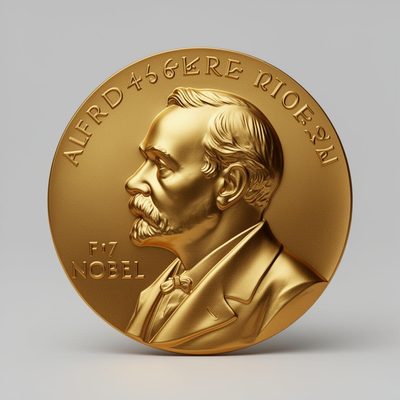 Dr. John C. MatherNobel Prize in Physics · Signatory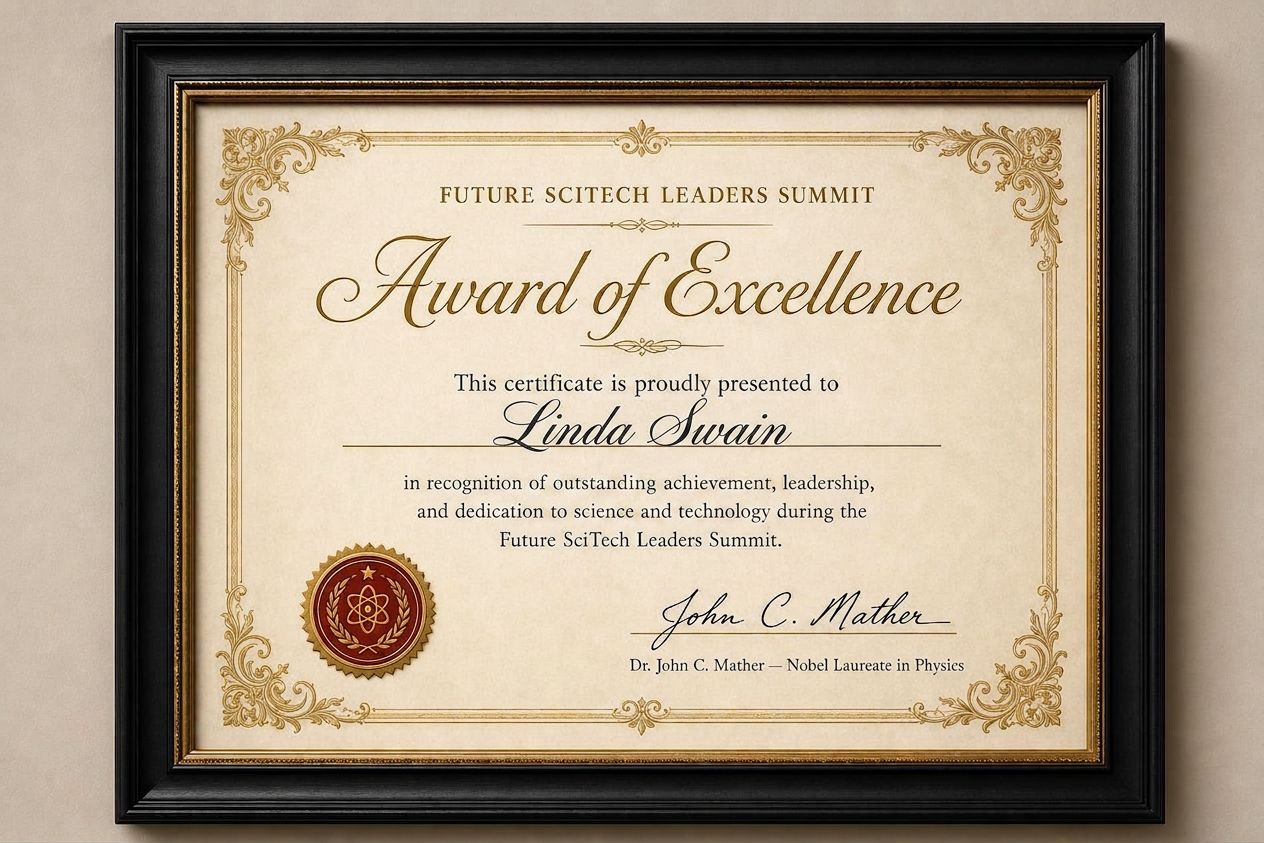
Accept Your Nomination →
Financial aid available — Apply for a scholarship →
The Core Pillars
Eleven pillars that will shape the future of science, technology, and humanity.
01 — 11
Focuses on the development and architecture of machine intelligence, ranging from narrow AI to the pursuit of Artificial General Intelligence (AGI). Key areas include neural networks, machine learning, and how these technologies transform fields like medicine and materials discovery, alongside critical discussions on AI safety and algorithmic ethics.
Frames computing as a foundational discipline for shaping reality, covering programming fundamentals, algorithms, and computational thinking. It includes the study of complex systems, quantum computing's potential to scale processing power, and the invisible software that governs the modern world.
Focuses on the transition of biology into an engineering discipline where life can be programmed. This includes CRISPR and precise gene editing, synthetic biology for designing organisms from scratch, brain-computer interfaces, and the ethical implications of "hacking" life to cure diseases or modify genomes.
Addresses one of the generation's defining challenges by examining climate science fundamentals and the technological solutions to address it. Topics include nuclear fusion progress, advanced battery storage, carbon capture, and the physics of sustainable energy systems.
Covers the mechanics and engineering required to explore the universe and understand reality at its most fundamental levels. This includes quantum mechanics, astrophysics, space propulsion technologies, and the search for biosignatures on exoplanets.
Focuses on creative problem-solving and building the physical future, spanning mechanical, civil, and biomedical engineering. It explores automation, sensor technology, human-robot interaction, and the development of resilient infrastructure for extreme environments.
Connects the microscopic molecular world to everyday technological applications. This pillar investigates atomic structures, chemical reactions, and the invention of advanced substances like graphene, self-healing materials, and nanomaterials for energy and medicine.
Examines the risks and responsibilities inherent in a connected digital world, including encryption, network security, and data protection. It addresses threats from AI-driven attacks and the ethical alignment of autonomous systems regarding digital trust.
Highlights the process of translating scientific research and lab breakthroughs into real-world impact through startups and commercialization. It covers identifying critical problems, design thinking, prototyping, and the role of intellectual property in the innovation pipeline.
Examines how computation, data, and cryptography are reengineering money and the movement of value across the global economy. This pillar covers algorithmic trading, blockchain and distributed ledgers, digital currencies, and the mathematics of risk, alongside the questions of access, regulation, and security that arise when financial systems become programmable.
Schedule
Three days in Boston, Massachusetts.
A preview of the three-day honors program. This is a preliminary schedule and speakers and topics may change.
I
Day One · Sunday, June 276:00 PM – 9:30 PM
Foundations of Discovery & The Digital Frontier
Focus on the "operating system" of science and the computational tools shaping our reality.
- Scientific Thinking and Evidence — Learn why failure is a feature of science and how to navigate the "messiness" of real-world research.
- Programming and Computer Science — Explore the "invisible software" running our world and the transition from classical to quantum computing.
- Artificial Intelligence — Dive into the architecture of neural networks and the pursuit of Artificial General Intelligence (AGI).
- Cybersecurity and Privacy — Discover how to "think like a hacker" to understand digital trust and encryption in a connected society.
- Financial Technology (FinTech) — Examine how algorithmic trading, blockchain, and digital currencies are reengineering money — and the questions of access, regulation, and security that arise when financial systems become programmable.
- Ethics of Algorithms — A moderated discussion on AI safety, algorithmic bias, and the ethical alignment of autonomous systems.
II
Day Two · Monday, June 2810:00 AM – 9:30 PM
The Biological Revolution & Engineering the Future
Explore how biology is becoming an engineering discipline and how we build for the physical world.
- Genetics and Biotechnology — Understand CRISPR and the power of rewriting genomes to cure diseases or program life from scratch.
- Engineering and Robotics — See how engineers turn ideas into reality through autonomous systems, automation, and human-robot interaction.
- Chemistry and Materials Science — Investigate molecules that change the world, from nanotechnology to graphene and self-healing materials.
- Interdisciplinary Panel — How AI is Changing Biology — How machine learning is accelerating drug discovery and synthetic biology.
- Grand Challenge Session — A deep dive into one of science's biggest hurdles, such as regenerative medicine or pandemic prevention.
III
Day Three · Tuesday, June 2910:00 AM – 9:30 PM
Planetary Systems, Space, & The Path to Impact
Focus on global-scale challenges, the mechanics of space exploration, and translating ideas into action.
- Climate Change and Renewable Energy — The physics of the future: nuclear fusion progress, advanced battery storage, and carbon capture.
- Physics and Space Science — The search for life on exoplanets and the advanced propulsion systems required for multiplanetary travel.
- Innovation and Entrepreneurship — Moving breakthroughs from the lab to the market through startups and social entrepreneurship.
- Career Reality Panel — A "day-in-the-life" session with research scientists, startup founders, and policy advisors.
- Commencement
- Presentation of The Award of Excellence
- Dance — (optional)
A Special Message to Parents
For parents who attend the Summit with their Delegate, a special treasure awaits.
Since you hear and see the same things they do, you share a rare and special bond. Because of your shared experience and language, you develop deeper, more meaningful discussions together.
80.2%
OF STUDENTS FEEL CLOSER TO THEIR PARENTS
OF STUDENTS FEEL CLOSER TO THEIR PARENTS
88.9%
OF STUDENTS WERE EVEN MORE CONFIDENT OF THEIR FUTURE
OF STUDENTS WERE EVEN MORE CONFIDENT OF THEIR FUTURE
Many parents see for the first time how big and meaningful their child's future can be, and how they can best support that dream. The can see and feel the renewed confidence in their child. We have seen time and time again how much this common bond can strengthen the relationship between parent and child.

Science Director
John C. Mather, Ph.D.
Science Director of The National Leadership AcademiesRecipient of the Nobel Prize in Physics, for his discovery of the black body form and anisotropies of the cosmic microwave background radiation. As a National Research Council Postdoctoral Fellow at the Goddard Institute for Space Studies, he led the team that proposed the Cosmic Background Explorer (COBE) satellite mission — work that helped cement the Big Bang theory of the universe.
Mather is a senior astrophysicist at the NASA Goddard Space Flight Center in Maryland and adjunct professor of physics at the University of Maryland, College Park. Dr. Mather was also the project scientist (1995–2023) for the James Webb Space Telescope, the largest, most powerful, and complex space telescope ever built and launched into space.
Dr. Mather studied cosmic microwave background radiation and received his Ph.D. in physics from the University of California. Dr. Mather was listed among Time magazine's 100 Most Influential People in the World.
Nobel Prize in PhysicsJWST Project ScientistNASA GoddardTIME 100 Most Influential
Past Speakers
Mentored by great leaders who built the future.
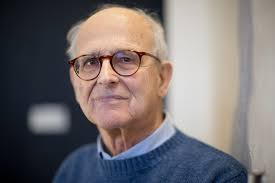
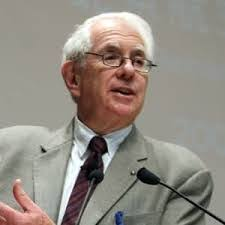
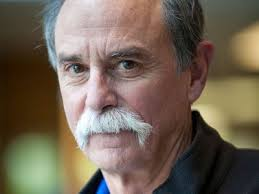
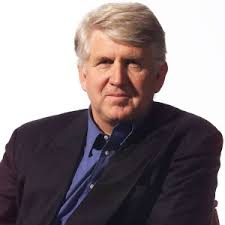
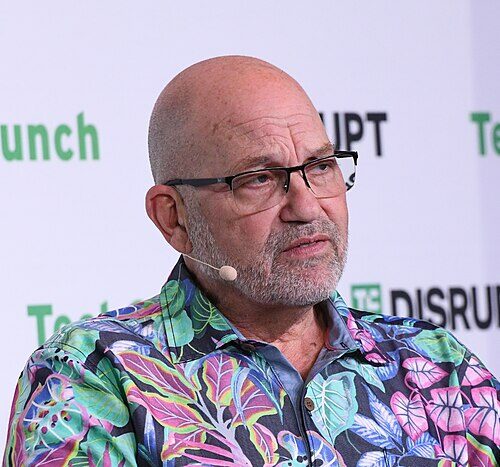
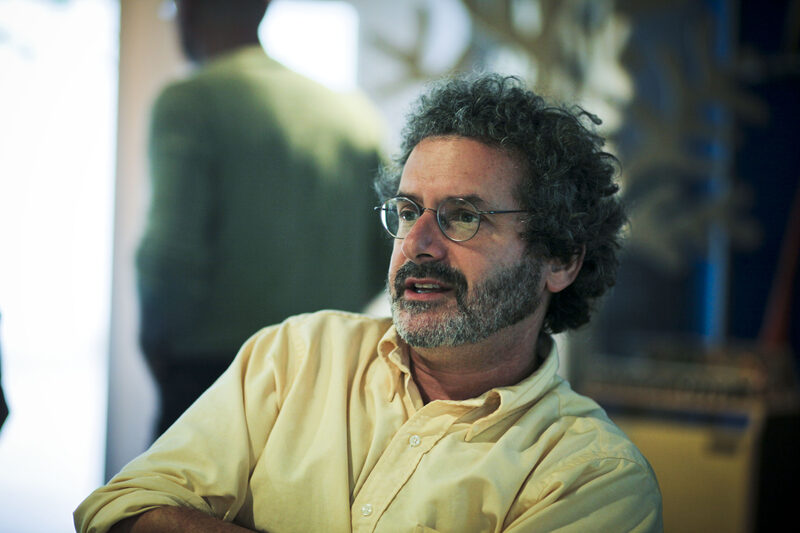
Some of the distinguished world leaders in science and technology who have mentored Summit Delegates.


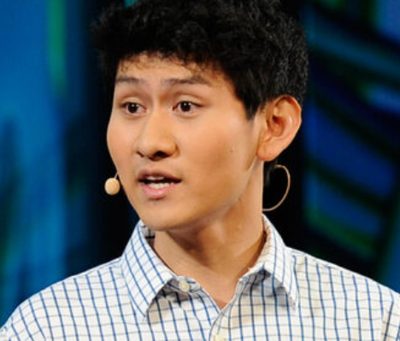

What People Are Saying
Signals from the floor.
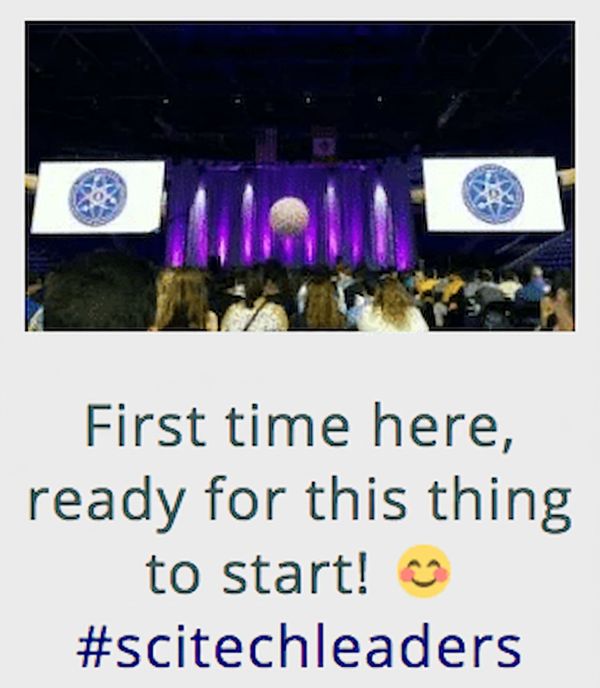
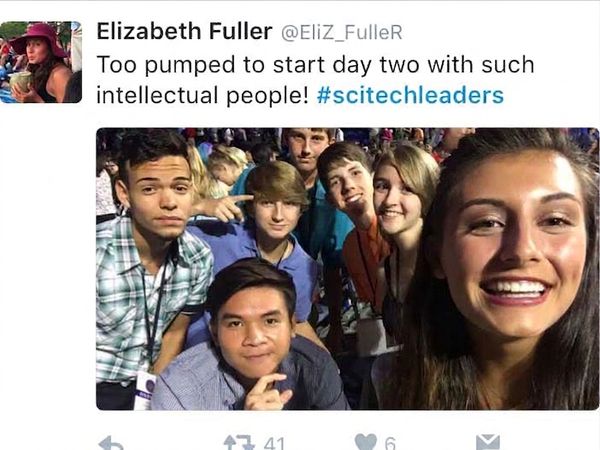
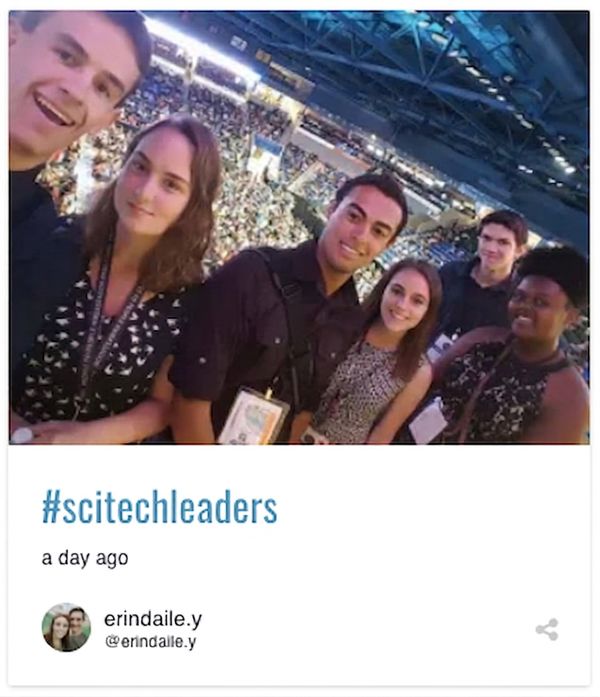
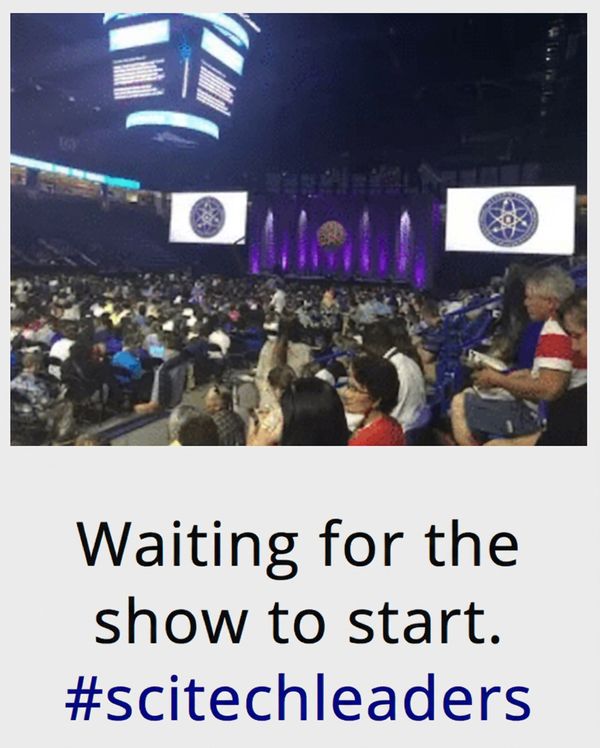
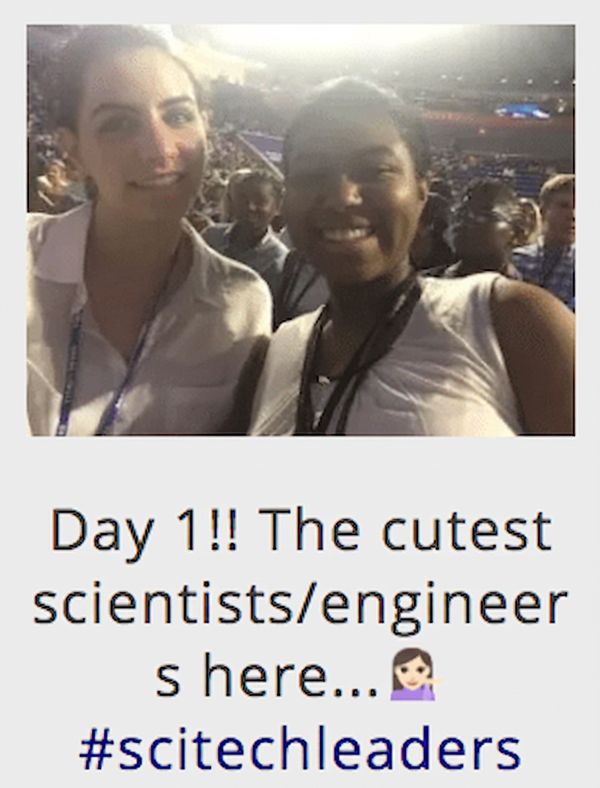
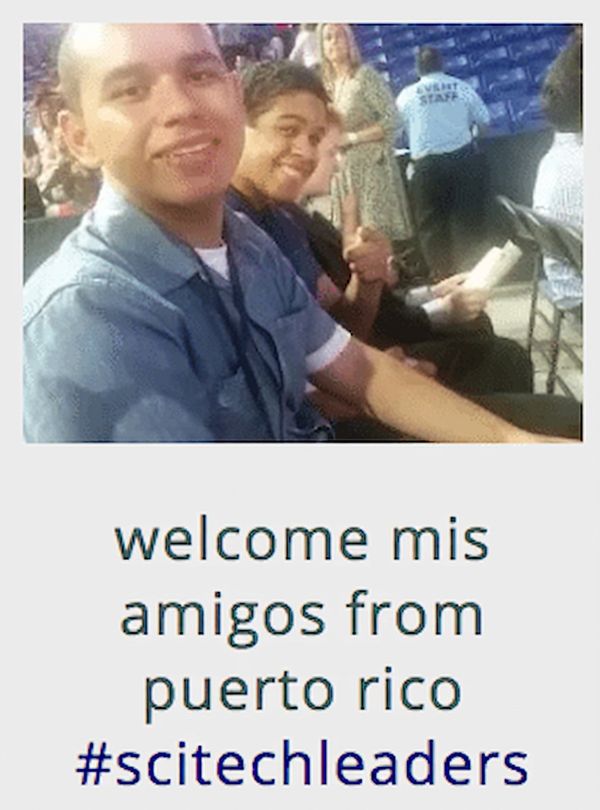
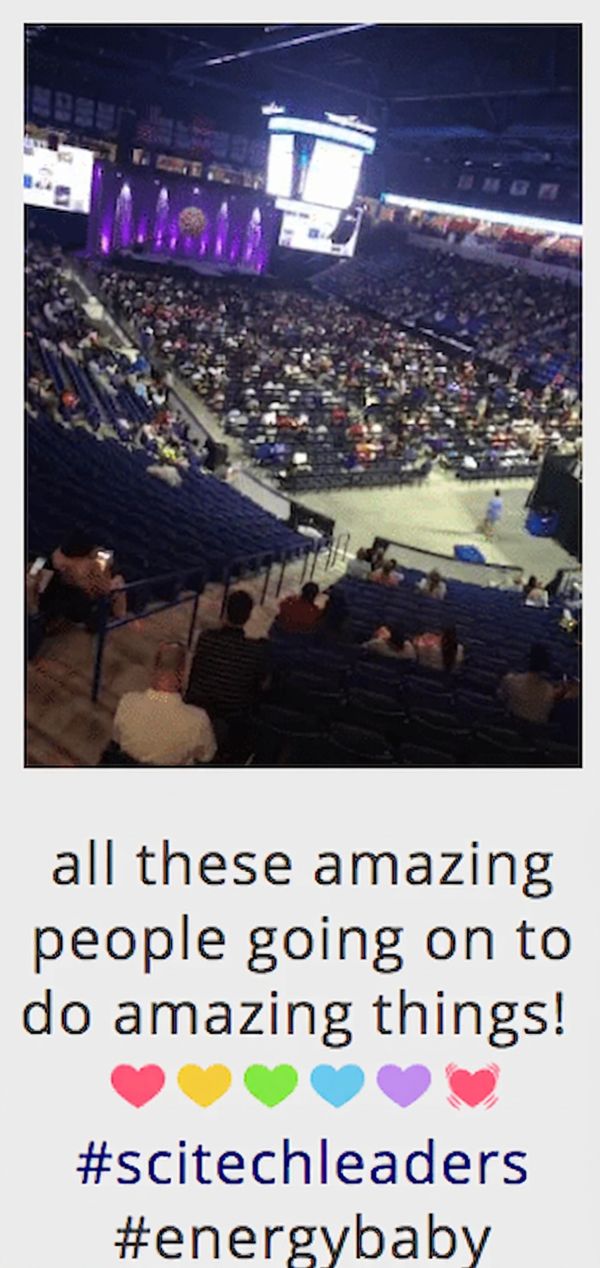
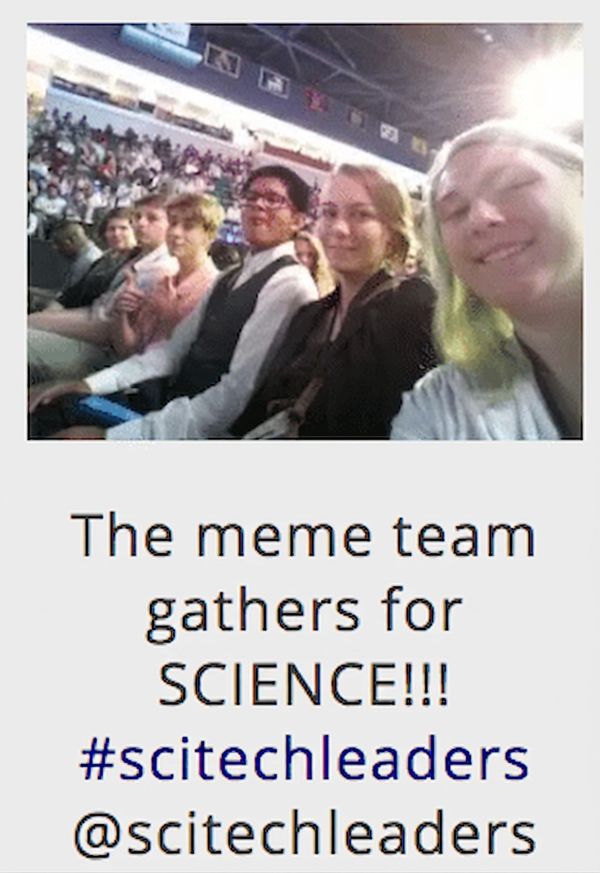
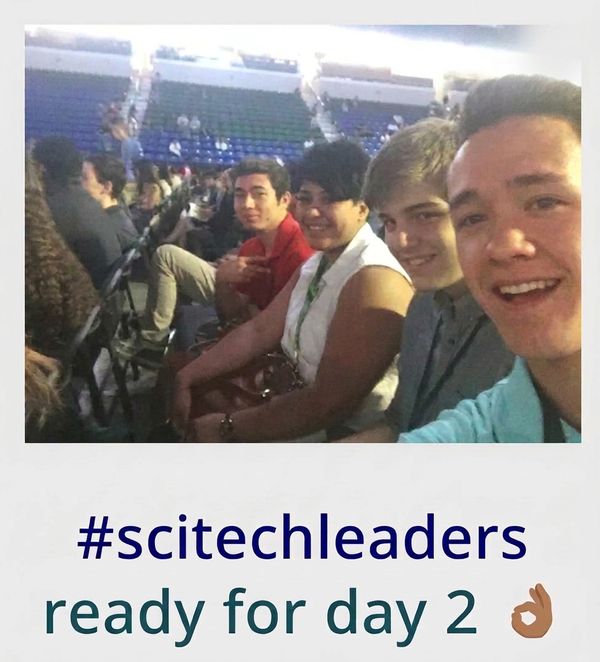
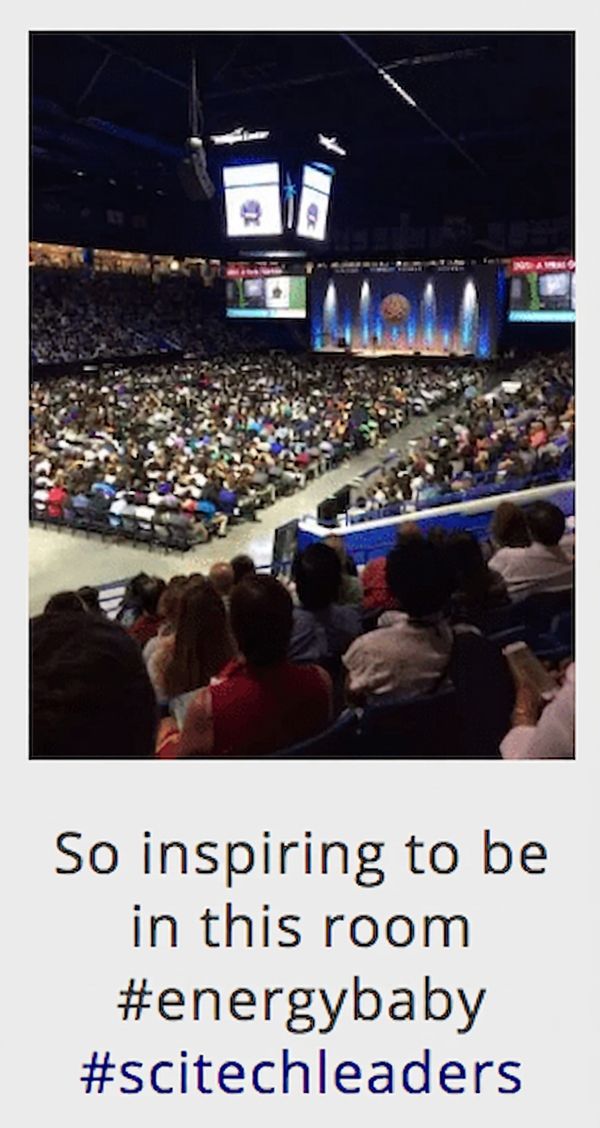
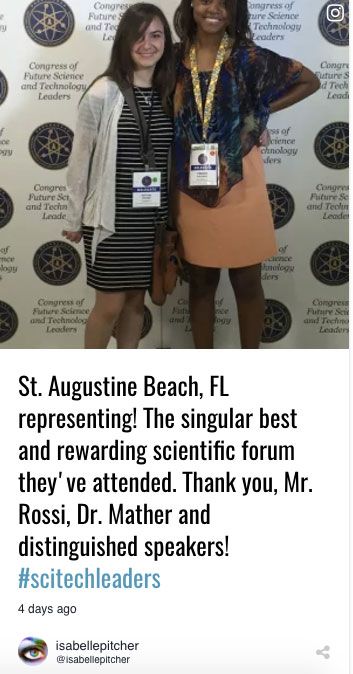
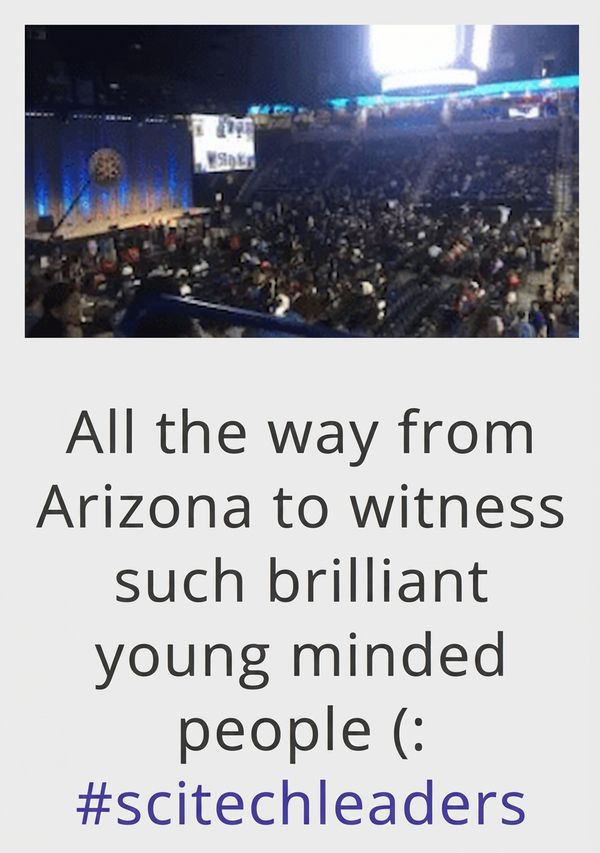
As posted by delegates & parents · #scitechleaders
Delegate & Parent Information
An honors program, by design.
What Makes the Summit Unique?
The Summit is historic in nature. Thousands of the country's most gifted high school students gather with today's brightest scientific minds. It is uniquely designed to honor, inspire, motivate, and direct the top students in our country and help them stay true to their dreams.
The lifetime friendships made with future colleagues and the opportunity to network with scientific and technological professionals can also give Summit Delegates a competitive edge and greater focus as they begin their journey into a career. Most importantly, after the Summit, Delegates will enter into the Academy's free mentoring program which will provide them with resources to create a path and plan to help them reach their goals.
The Summit Gathers Great Mentors
The Summit brings together a diverse group of speaker mentors, including Nobel Laureates, renowned researchers, pioneering entrepreneurs, accomplished engineers, and exceptional early-career scientists. Rather than focusing solely on technical content, speakers share the personal stories, failures, breakthroughs, and decisions that shaped their careers.
By combining cutting-edge scientific exploration with discussions of ethics, entrepreneurship, policy, and career pathways, the Summit empowers students to think critically, ask bigger questions, and envision their own role in building a more innovative, sustainable, and technologically advanced future.
Selection to the Summit
Students selected to attend are identified by teachers, counselors, and school administrators for their dedication to entering scientific and technological fields, as well as for their leadership potential and academic excellence. Many are chosen because they show early promise as investigators and innovators.
Qualified students may also be identified through academic events, recommendations, youth organizations, honor societies, scientific institutions, STEM societies, program Alumni, or through their participation in classroom surveys. This nomination process ensures the Summit remains one of the most respected scientific summer programs for high-achieving students.
The Summit — An Honors Program
The Future SciTech Leaders Summit is the only large-scale summer program that requires a minimum academic achievement to attend. That's because the people around you matter. The Summit brings together academically accomplished students who have demonstrated both achievement and potential.
The result is a unique learning environment where students engage with ambitious peers, ask bigger questions, form lasting connections, and gain confidence from being part of a community of future leaders. For many students, the nomination itself is an honor; attending the Summit is an opportunity to learn alongside others who share their passion for medicine, science, and making a difference in the world.
Frequently Asked Questions
Everything parents ask us.
The Future SciTech Leaders Summit will be held June 27 to 29, 2027, Lowell, Massachusetts, about 30 miles from Boston. On Sunday, June 27th, the Summit will begin at 6 PM and end at 9:30 PM. On Monday, June 28th, and Tuesday, June 29th, the Summit will run from 10 AM to 9:30 PM.
Students selected to attend the Future SciTech Leaders Summit are identified by teachers, counselors, and school administrators for their dedication to entering scientific and technological fields, as well as for their leadership potential and academic excellence. Many are chosen because they show early promise as investigators and innovators and are strong candidates for leadership opportunities, whether in high school or college.
Qualified students may also be identified through academic events, recommendations, youth organizations, honor societies, scientific institutions, STEM societies, program Alumni, or through their participation in classroom surveys. This nomination process ensures that the Summit remains one of the most respected scientific summer programs for high-achieving students and a nationally recognized conference that supports gifted students pursuing advanced STEM.
No, simply attending the Summit alone will not open the doors to your dream school. However, the education, motivation, and recognition at the Summit can inspire students to take the personal actions necessary to become much stronger candidates for admission to competitive colleges. Attendance at the Summit can also enrich a student's academic profile by adding to their showcase of extracurricular experience and achievement needed when applying to colleges and universities.
The Summit is an academic honors program. You must have a minimum GPA of 3.5 or higher, either current or cumulative, or an ACT score of 22 or higher, or an SAT score of 1300 or higher. Complete information on how to verify your GPA will be provided at enrollment.
If you arrive at the Summit without a verified GPA, you will still be allowed to participate, but you will not receive your Award of Excellence until you provide documentation.
Yes! Delegates have the unique opportunity to earn college credit due to the caliber of learning at the Summit. This optional program is available for an additional cost and includes required coursework.
Benefits of Earning College Credit:
• Demonstrates College Readiness: Shows commitment to academics and the ability to handle challenging coursework — qualities colleges value.
• Higher Acceptance Rates: Students who take college courses in high school often have higher acceptance rates, especially at selective institutions.
• Advanced Placement: Earned credits may allow students to bypass introductory college courses, giving them a head start in their degree programs.
For questions regarding college credit, please contact admissions@SciTechLeaders.com.
Yes. The National Leadership Academies is proud to offer scholarships based on financial need. To discuss options further or for an immediate response, please call the Admissions Office at 617-307-7425.
Tuition includes instruction, speakers, education personnel, the Future SciTech Leaders Summit Award of Excellence, and all activities at the Summit.
Parents and family members can attend free of charge on a space-available basis. All students and family attending the Summit are responsible for their own travel, lodging, and meals, which will be available throughout the day at the Summit.
Regardless of whether you attend the Summit, you should stay in touch with us at the Academy to take advantage of the many free programs and services we offer.
Parent Participation Parents may observe the Summit, giving them an opportunity to see and hear what their Delegate does. Because of their shared experience and language, deeper, more meaningful discussions come naturally. In fact, over 80% of students and parents say they feel closer to one another after sharing the Summit. We have seen time and time again how much this common bond can strengthen the parent-child relationship. While a live stream is available free to all parents, other opportunities on-site may be available.
For students unable to travel with a parent, the Overnight Program (additional fee) provides a pre-college experience, including airport pickup, room check-in, resident assistants, supervised departure, and breakfast.
Students may receive a refund within 60 days of their first payment (whether that is a full payment or a payment plan) on or before May 1, 2027, whichever comes first. Any cancellation and request for refund must be submitted in writing by the Parent/Guardian who submitted the enrollment. Refunds may take 4-6 weeks to process. Any Delegate dismissed from the Summit for violation of the Code of Conduct is not eligible for any refund.
The National Leadership Academies is a tax-paying organization that receives no public or private funding. We have the greatest respect for non-profit charities and academic institutions that help make our lives better. However, we don't think you should have to underwrite our work with your taxes. When organizations don't pay taxes, all of us chip in to make up the difference on April 15th.
The Academy pays taxes, accepts no public assistance, and is completely self-sustaining through tuition from academic seminars and conferences. The Academy offers extensive programs and services that are free to all students who wish to take advantage of them.
The Future SciTech Leaders Summit is designed for honors high school students who want to pursue careers in science or technology. Students attending must have a GPA of 3.5 or higher, either current or cumulative, or an ACT score of 22 or higher, or an SAT score of 1300 or higher. If that sounds like you, you're welcome to have a parent officially nominate you.
Please have a parent contact admissions@SciTechLeaders.com to submit a request on your behalf.
After attending the Summit, and upon verification of your GPA or test scores, you will receive the Future SciTech Leaders Summit Award of Excellence. The Award is earned by attending all three days of the Summit and participating in activities.
Delegates will be able to create their own news release using an easy-to-follow program developed by the Academy. Included are instructions on how to distribute this release to local newspapers and television stations so that delegates can get maximum recognition for their achievements.
The Academy encourages all students with disabilities to attend. This of course includes family members. Please call the Admissions Office to discuss specific needs by phone at 617-307-7425.
No, outside food and drinks are not allowed at the Summit as per the venue's policy. If you have specific dietary restrictions, please contact us at Admissions@SciTechLeaders.com for assistance and accommodations.
In an attempt to help you with your lodging needs for the Summit, we have contacted a few hotels in the area and arranged special rates specifically for you.
Please contact us at Admissions@SciTechLeaders.com for assistance with accommodations.
YES! We highly recommend purchasing travel insurance for your trip. We have partnered with Generali Insurance to offer travel insurance that helps cover unexpected events such as medical emergencies, trip interruptions or travel delays. Travel insurance ensures that families are financially protected during unforeseen circumstances. To purchase travel insurance for your Summit trip, please go here.
Please contact the Admissions Office on 617-307-7425 or email admissions@SciTechLeaders.com.
Science Research Writing Certification
Become a scientific research writer.
The world's first Laureate Certification Course in Advanced Science Research Writing
Upon successful completion of the Summit, Delegates are eligible for the Science Research Writing Certification course. This intensive 10-week course consists of self-paced modules covering all aspects of documenting a research project and creating a professional-grade research paper.
Upon successful completion of this course, students will receive an official certificate signed by a Nobel Laureate and will possess the skills and knowledge to author a paper which may be submitted to the most prestigious national and international STEM competitions. This extraordinary distinction will change the course of your college admissions and will further inform your passion for STEM.
Demonstrate your passion, drive and commitment to your bright STEM future by earning a unique credential that only a SELECT few students in the world possess.
Earn your Advanced Academic Certification in Science Research Writing under the auspices of Nobel Laureates in Medicine or Physiology, and receive your personalized certificate authenticated by a Nobel Prize Winner to prove it.
— Signed and Certified by a Nobel Prize Winner —
Contact Us
Reach the office.
Accept Your Nomination →Boston Office
Harvard Square1 Mifflin Place, Suite 400
Cambridge, MA 02138
Washington Office
1701 Pennsylvania Ave NWSuite 200
Washington D.C. 20006
Office Hours
Monday – Friday
9:00 am – 6:00 pm Eastern